
Rideshare apps like Uber and Lyft have completely revolutionized how we travel across New Jersey.
Practice Area
New Jersey Rideshare Accident Lawyers (Uber & Lyft)
The Convenience of the App Should Not Leave You Financially Devastated.
Rideshare apps like Uber and Lyft have completely revolutionized how we travel across New Jersey.
- No Fee Unless We Win
- Free Case Review
- Trial-Ready Attorneys
- New Jersey Focused

Rideshare apps like Uber and Lyft have completely revolutionized how we travel across New Jersey. Whether you are commuting to a train station, heading home safely after a night out in Hoboken, or running errands in the suburbs, pulling out your phone and hailing a ride is effortless.
However, when that ride ends in a violent collision, the simplicity of the app vanishes. It is immediately replaced by one of the most convoluted, intensely litigated insurance frameworks in the entire legal system. You are suddenly caught in a crossfire between the rideshare driver’s personal auto insurance, the multi-billion dollar tech company’s commercial liability carriers, and your own health insurance—with all of them pointing fingers at each other, refusing to pay your mounting medical bills.
Whether you were severely injured as a passenger inside an Uber, or you were a pedestrian, cyclist, or driver struck by a Lyft vehicle, you are facing a highly complex legal battle. At Pinnacle Injury Law, we specialize in piercing the corporate shields of the gig economy. We know how to force these tech giants to take responsibility, navigate the overlapping insurance policies, and secure the absolute maximum compensation for your life-altering injuries.

Uber and Lyft are not traditional taxi or limousine services. They refer to themselves as "Transportation Network Companies" (TNCs) or simply technology platforms. They aggressively classify their drivers as independent contractors, not employees.
This classification is not accidental; it is a deliberate legal strategy designed to shield the corporation from liability when a driver causes a devastating crash. When an Uber or Lyft driver runs a red light and shatters your spine, the company's immediate legal defense is often: "That driver does not work for us. We just make the app." To recover the money you deserve, your attorney must understand exactly how to bypass this defense by utilizing New Jersey’s highly specific rideshare insurance laws.
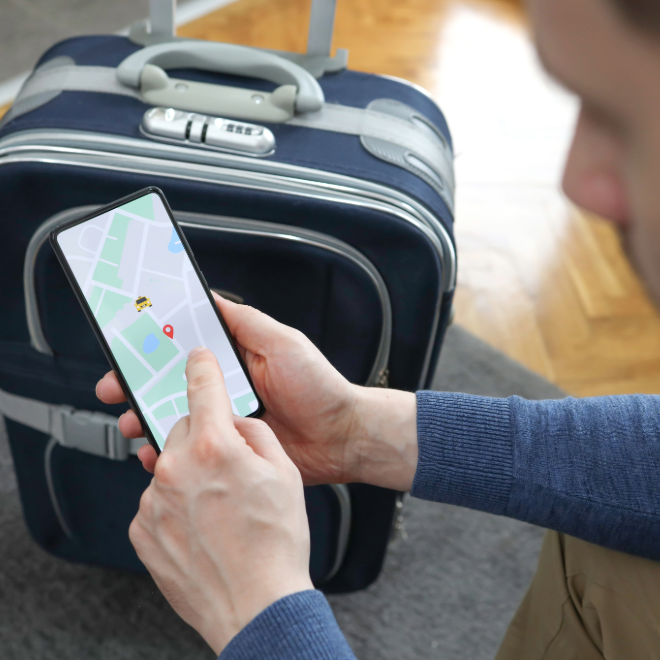
Because rideshare drivers use their personal vehicles, a standard personal auto insurance policy usually contains a "business use exemption" that completely voids coverage the moment the driver turns the app on to make money. To close this dangerous gap, New Jersey passed the Transportation Network Company Safety and Regulatory Act (TNC Act).
Under the TNC Act, the amount of insurance money available to compensate you for your injuries depends entirely on the driver's exact digital status inside the app at the precise millisecond the crash occurred. The law divides coverage into strict "Phases":
Phase 0
The App is Off. If the driver is driving their car but the Uber or Lyft app is completely turned off, the tech company provides absolutely zero coverage. The driver is treated like any other private citizen, and you must file a claim strictly against their personal auto insurance policy, which may only have New Jersey’s state-minimum limits (currently $35,000 for policies renewed in 2026).
Phase 1
The App is On, But No Ride is Accepted. The driver is logged into the app, circling a neighborhood or sitting in a parking lot, waiting for the algorithm to ping them with a ride request. During this phase, New Jersey law forces the rideshare company to provide contingent liability coverage of $50,000 per person / $100,000 per accident for bodily injury, plus $25,000 for property damage.
Phases 2 & 3
Match Accepted, En Route, or Passenger in the Vehicle. The moment the driver taps "Accept" on a ride request, or any time a paying passenger is physically inside the vehicle, the highest level of coverage activates. The rideshare company’s commercial policy becomes primary, providing a massive $1.5 million in liability coverage and $1.5 million in Uninsured/Underinsured Motorist (UM/UIM) coverage.
Corporate insurance carriers will fight ruthlessly to prove the driver was in Phase 1 rather than Phase 2 to save themselves over a million dollars in potential payouts. Pinnacle Injury Law moves aggressively to subpoena the tech company's internal digital logs, server timestamps, and the driver's smartphone data to definitively prove exactly which phase applied to your crash.

One of the most shocking and confusing aspects of a rideshare accident in New Jersey involves how your emergency room visits and surgeries are paid for if you were a passenger in the Uber or Lyft.
Most people logically assume that if they are injured inside an Uber, Uber's insurance will automatically pay their hospital bills. Because New Jersey is a strict "No-Fault" state, this is frequently incorrect.
If you own a car in New Jersey
Your own auto insurance policy’s Personal Injury Protection (PIP) must pay your medical bills first, even though your car was parked at home and you were riding in an Uber.
If you live with a family member who owns a car
Their PIP policy becomes the primary payer for your medical treatment.
If there is no auto insurance in your household
Only then does the rideshare company’s specialized medical coverage (which provides $10,000 in primary medical benefits) or your private health insurance step in.
The attorneys at Pinnacle Injury Law untangle this bureaucratic nightmare. We handle the complex coordination of PIP, health insurance liens, and commercial liability claims so your medical treatment is never interrupted and you do not end up in collections.
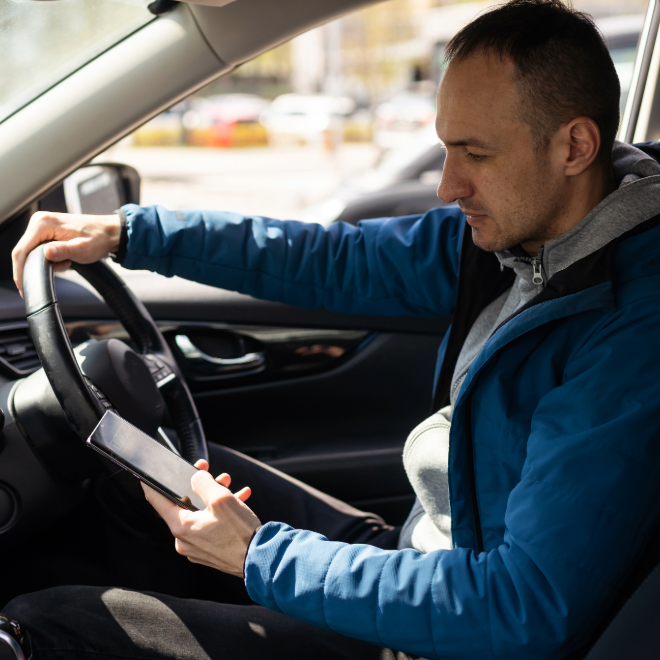
Rideshare drivers are heavily incentivized to complete as many trips as possible in the shortest amount of time. They are constantly monitoring a mounted smartphone, accepting new rides while navigating unfamiliar neighborhoods, communicating with passengers, and relying heavily on turn-by-turn GPS.
This creates an environment ripe for devastating driver errors. We frequently investigate rideshare collisions caused by:
Digital Distraction
Drivers looking at the app to accept a new fare instead of watching for pedestrians in a crosswalk or noticing brake lights ahead of them.
Sudden, Illegal Stops
Drivers aggressively slamming on the brakes, pulling into bike lanes, or double-parking on busy roadways because the GPS told them they had reached the drop-off pin.
Fatigue
Drivers working a full-time job during the day and driving for Uber late into the night, leading to severely delayed reaction times.
Unfamiliar Territory
Drivers aggressively cutting across multiple lanes of traffic to make a sudden highway exit they almost missed.

The moment an Uber or Lyft is involved in a severe crash, the company's specialized risk management team goes to work building a defense. They hold all the digital cards.
You cannot afford to wait. When you hire Pinnacle Injury Law, our first step is to issue legally binding Anti-Spoliation Letters to the tech giants and the driver. This forces them to preserve crucial digital evidence, including:
- The exact GPS coordinates, speed, and braking force of the vehicle.
- The specific server timestamps proving the driver was logged in and actively matched with a passenger.
- The driver’s historical safety record, customer complaints, and background check data to prove negligent retention by the company.
- Dashcam footage, which is increasingly common in rideshare vehicles.

Whether you suffered a traumatic brain injury (TBI) from striking the partition, a shattered pelvis from a high-speed T-bone collision, or severe whiplash from a sudden rear-end crash, we refuse to let corporate insurance adjusters minimize your trauma.
Because we know there is up to $1.5 million in available coverage, we prepare your case for maximum value from day one. We partner with leading medical specialists, vocational experts, and economists to calculate the total lifelong impact of the crash. We aggressively demand compensation for:
- All past, present, and projected future medical care, including surgeries and rehabilitation.
- Lost wages and the complete loss of your future earning capacity.
- The profound physical pain, emotional trauma, and devastating loss of your quality of life.

Tech companies have spent millions of dollars structuring their businesses to avoid paying for the injuries they cause. Do not attempt to fight them and their elite defense teams alone.
Contact Pinnacle Injury Law today at (201) 265-4500 or fill out our online form to schedule a free, fully confidential consultation. We will evaluate the specific facts of your crash, explain your legal rights, and relentlessly pursue the justice you deserve. We operate exclusively on a contingency fee basis—meaning we finance the entire investigation and litigation, and you pay us absolutely nothing unless we secure a financial recovery on your behalf.

Uber and Lyft are not traditional taxi or limousine services. They refer to themselves as "Transportation Network Companies" (TNCs) or simply technology platforms. They aggressively classify their drivers as independent contractors, not employees.
Because rideshare drivers use their personal vehicles, a standard personal auto insurance policy usually contains a "business use exemption" that completely voids coverage the moment the driver turns the app on to make money.
One of the most shocking and confusing aspects of a rideshare accident in New Jersey involves how your emergency room visits and surgeries are paid for if you were a passenger in the Uber or Lyft.
Rideshare drivers are heavily incentivized to complete as many trips as possible in the shortest amount of time.

The Convenience of the App Should Not Leave You Financially Devastated.
If you are dealing with the aftermath described on this page, Pinnacle Injury Law can review what happened, what evidence may matter, and what next steps may be available.