
The physical forces involved in a crash with a fully loaded, 80,000-pound semi-truck are difficult to comprehend until you survive one.
Practice Area
New Jersey Semi-Truck & 18-Wheeler Accident Lawyers
Elite Legal Representation for Catastrophic Commercial Truck Crashes
The physical forces involved in a crash with a fully loaded, 80,000-pound semi-truck are difficult to comprehend until you survive one.
- No Fee Unless We Win
- Free Case Review
- Trial-Ready Attorneys
- New Jersey Focused
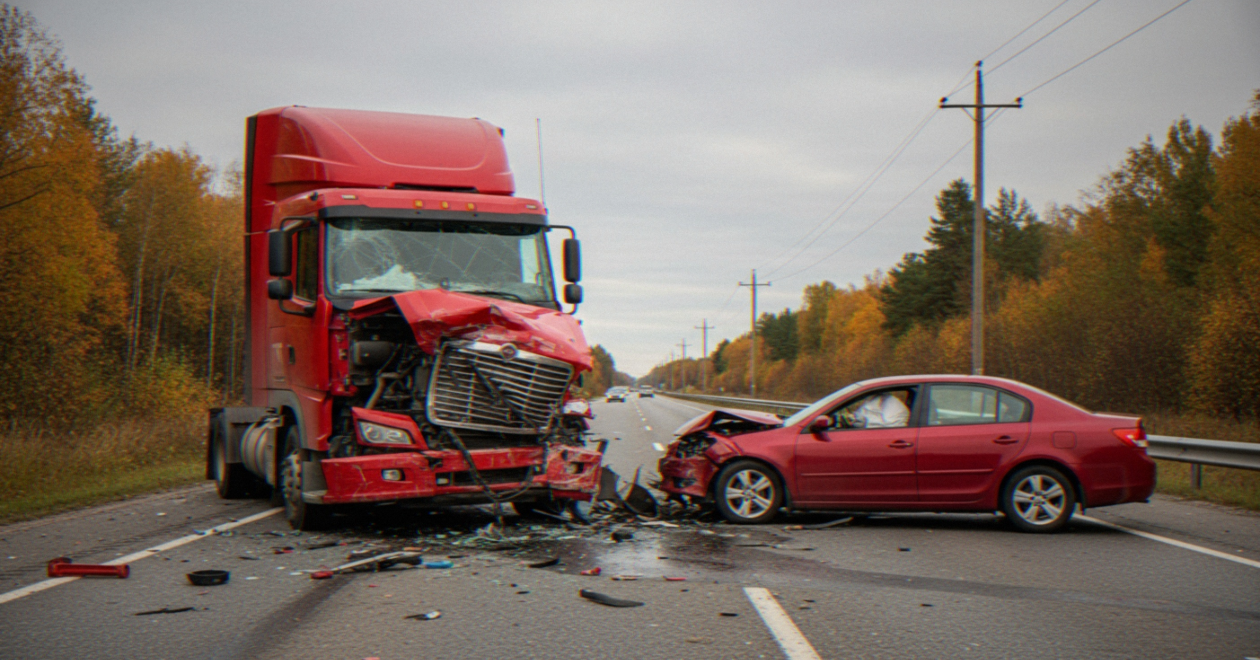
The physical forces involved in a crash with a fully loaded, 80,000-pound semi-truck are difficult to comprehend until you survive one. New Jersey’s major arteries—including the New Jersey Turnpike, the Garden State Parkway, I-95, I-80, and I-78—are heavily congested freight corridors. When an 18-wheeler collides with a 4,000-pound passenger car, the occupants of the car almost always suffer catastrophic, life-altering injuries.
Litigating a semi-truck accident is not comparable to handling a standard car crash. These are high-stakes, highly technical federal litigation scenarios. You are going up against massive interstate motor carriers, sophisticated logistics companies, and their teams of corporate defense lawyers. To win, you need a law firm that possesses specialized knowledge of federal trucking regulations, a network of top-tier accident reconstruction experts, and the financial resources to take a trucking conglomerate to court. That firm is Pinnacle Injury Law.

In a standard auto accident, liability is usually straightforward
one driver is at fault. In a commercial trucking accident, the trucking industry’s complex logistics network means that multiple corporate entities may share the blame for your injuries. At Pinnacle Injury Law, we look beyond the truck driver to identify every deep-pocketed party responsible for the crash, including:
The Motor Carrier (Trucking Company)
Liable for pushing drivers past legal hours, ignoring safety regulations, or failing to conduct mandatory background checks and drug screens.
The Freight Broker or Shipper
Liable for knowingly hiring an unsafe trucking company with a poor safety record to transport their goods.
The Cargo Loaders
Improperly loaded or unsecured freight can shift mid-transit, causing a massive 18-wheeler to jackknife or roll over. We hold loading companies accountable for gross negligence.
The Truck or Parts Manufacturer
If the crash was caused by a mechanical failure—such as defective air brakes, a blown steering tire, or a faulty coupling device—we will pursue product liability claims against the manufacturer.
Third-Party Maintenance Providers
Companies contracted to inspect and repair the commercial fleet can be held liable if they signed off on a dangerous vehicle.
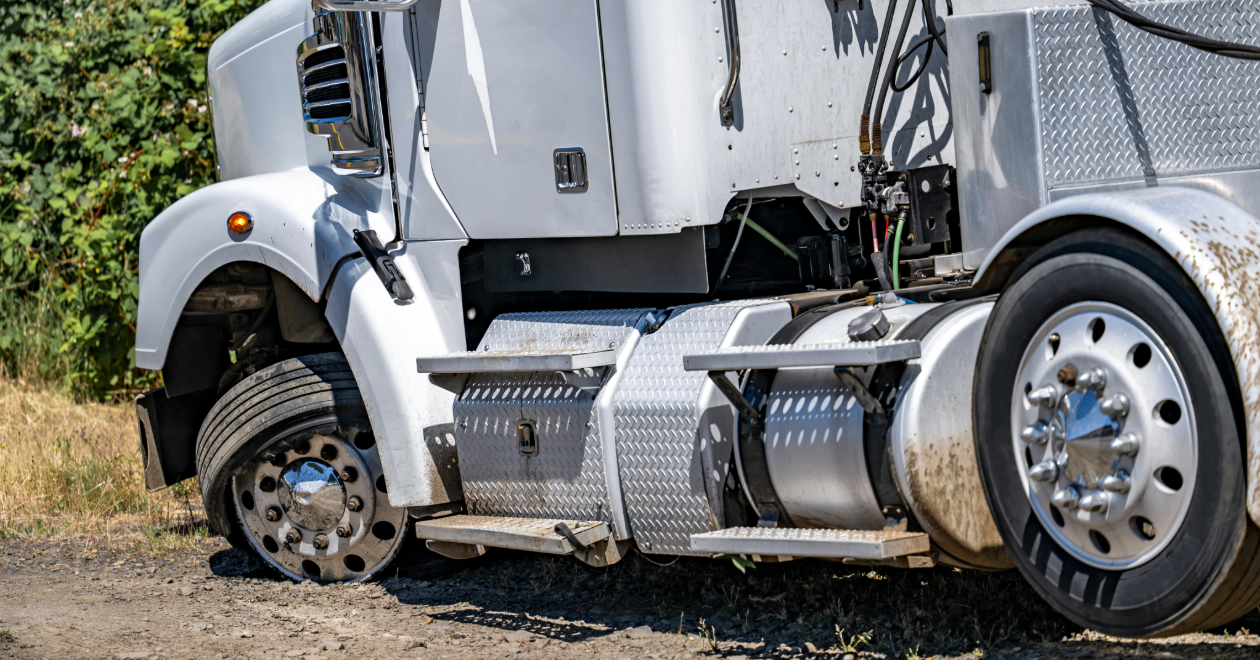
FMCSA compliance drives the case
The interstate trucking industry is heavily regulated by the Federal Motor Carrier Safety Administration. Proving negligence often comes down to showing that the driver or trucking company violated strict federal rules. Pinnacle Injury Law audits trucking companies for violations involving:
Hours of Service (HOS)
Federal law dictates exactly how many hours a driver can operate a truck before taking a mandatory rest break. To boost profits, trucking companies frequently pressure drivers to falsify their logbooks and drive through the night, leading to deadly driver fatigue.
Mandatory Drug and Alcohol Testing
Trucking companies must perform strict pre-employment, post-accident, and random drug testing. We subpoena these records to uncover whether a driver was operating under the influence of alcohol, prescription medications, or illegal stimulants used to stay awake.
Weight and Size Limits
Overweight trucks take significantly longer to stop and are highly susceptible to tire blowouts and brake failures. We analyze weigh station tickets and bills of lading to determine if the truck was illegally overloaded.
Maintenance and Inspection Logs
Drivers must perform and document pre-trip and post-trip inspections. We scrutinize these logs to prove that a trucking company knowingly allowed a dangerous vehicle onto a New Jersey highway.

Modern 18-wheelers are rolling computers. They are equipped with Electronic Logging Devices (ELDs) and Event Data Recorders (EDRs), commonly known as "black boxes." This equipment records critical data in the moments leading up to a crash, including the truck’s exact speed, GPS location, braking patterns, steering inputs, and engine RPMs.
Trucking companies know this data can destroy their defense. Under federal law, companies are only required to retain certain records for a limited period—sometimes as little as six months—before they are legally allowed to destroy them.
When you retain Pinnacle Injury Law, our first step is to issue an aggressive Anti-Spoliation Letter to the trucking company. This legally binding document forces the corporation to preserve the truck in its exact post-crash condition, retain all electronic data, and safeguard all dispatch communications. If they destroy evidence after receiving this letter, we can ask the judge to instruct the jury to assume the destroyed evidence proved the trucking company's guilt.
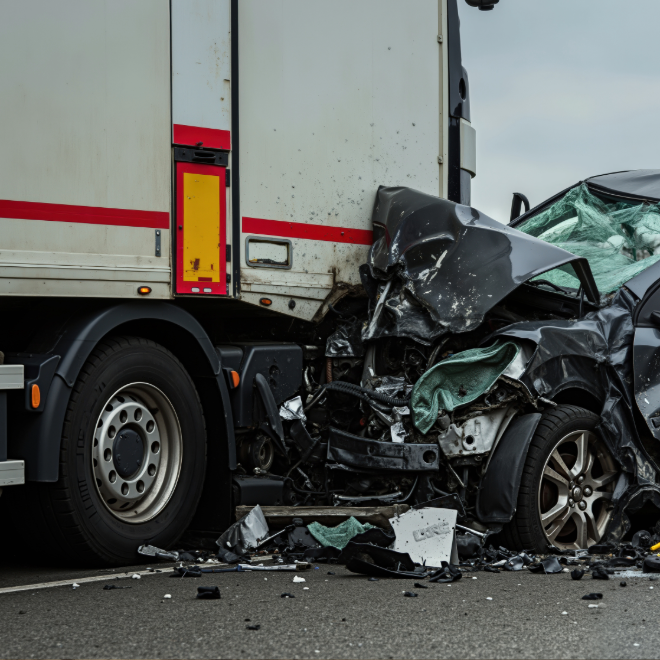
Catastrophic injury risk
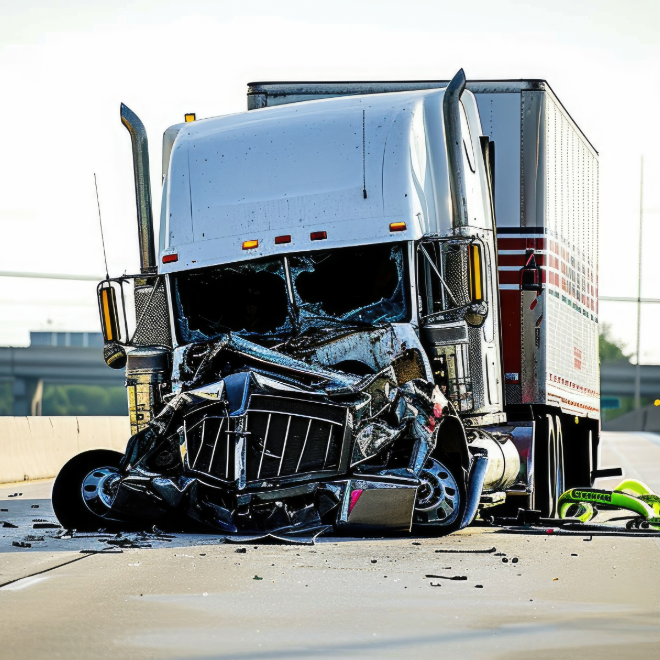
Because of the immense size discrepancy between an 18-wheeler and a passenger vehicle, the injuries sustained in these crashes are frequently permanent and devastating.
Traumatic Brain Injuries (TBI)
Ranging from severe concussions to permanent cognitive impairment requiring lifelong assisted living.
Spinal Cord Injuries
Leading to partial or total paralysis (paraplegia or quadriplegia).
Amputations and Crush Injuries
Often resulting from the vehicle being crushed underneath the trailer in devastating "underride" accidents.
Severe Burns
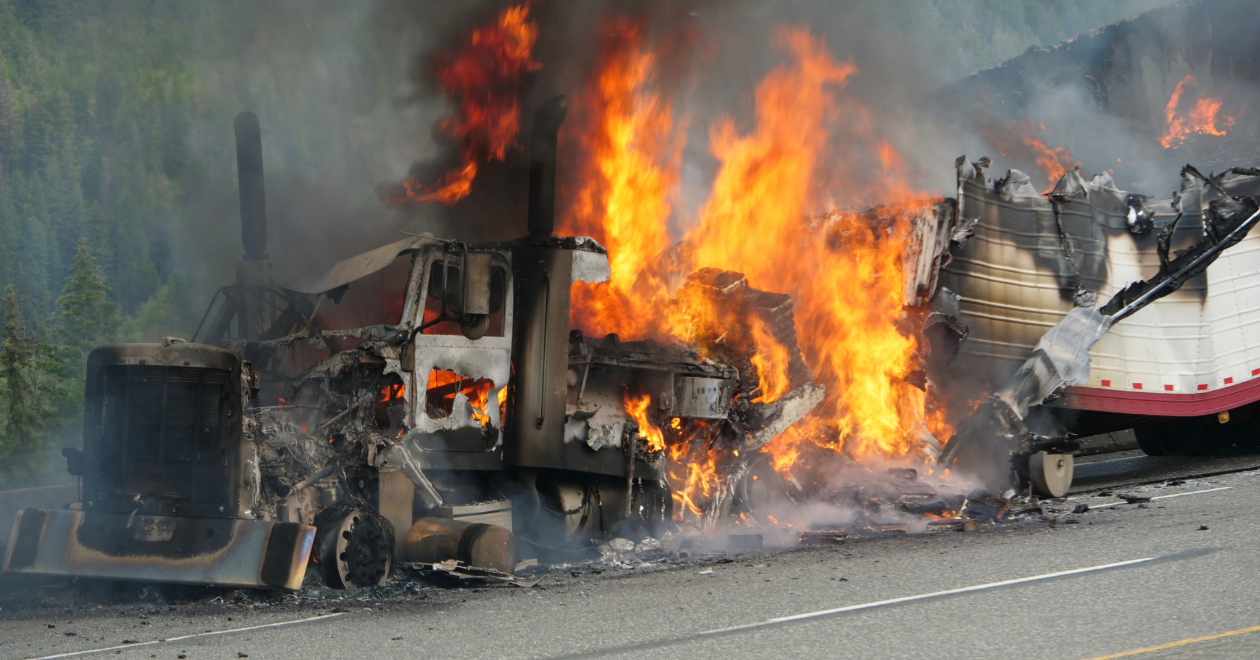
Resulting from ruptured diesel fuel tanks and highly flammable cargo.
Trucking companies carry massive insurance policies, often ranging from $1 million to $5 million or more. The insurance adjusters handling these high-limit policies are ruthless. They will attempt to settle your claim quickly, long before you realize that you may never be able to return to work or that you will need a lifetime of specialized medical care.
At Pinnacle Injury Law, we do not guess the value of your case. We partner with elite medical specialists, vocational rehabilitation experts, and forensic economists to build a comprehensive Life Care Plan. This plan scientifically calculates the exact financial cost of your injuries over the remainder of your life, ensuring that any settlement or jury verdict provides you with total financial security.
You have a limited window of time to file a personal injury lawsuit in New Jersey, but in a trucking case, the investigation must begin the very day of the crash.
Do not let a multi-million dollar corporation and their insurance team dictate your future. Level the playing field by contacting Pinnacle Injury Law today. Call us to schedule your free, no-obligation consultation. We advance all costs for investigations and expert witnesses, and you will never pay us a fee unless we win your case.

In a standard auto accident, liability is usually straightforward: one driver is at fault. In a commercial trucking accident, the trucking industry’s complex logistics network means that multiple corporate entities may share the blame for your injuries.
The interstate trucking industry is heavily regulated by the Federal Motor Carrier Safety Administration (FMCSA). Proving negligence in an 18-wheeler case often comes down to proving that the driver or the trucking company violated these strict federal rules.
Modern 18-wheelers are rolling computers. They are equipped with Electronic Logging Devices (ELDs) and Event Data Recorders (EDRs), commonly known as "black boxes." This equipment records critical data in the moments leading up to a crash, including the...
Because of the immense size discrepancy between an 18-wheeler and a passenger vehicle, the injuries sustained in these crashes are frequently permanent and devastating. Common outcomes include:
Elite Legal Representation for Catastrophic Commercial Truck Crashes
If you are dealing with the aftermath described on this page, Pinnacle Injury Law can review what happened, what evidence may matter, and what next steps may be available.